
Cyberdrui.de — a hooded cyber druid holding a hex orb and a laptop
01 / About · Codex & Manifesto

The cyber druid.

The rites are old.
Curiosity · Patience · A healthy paranoia
I practice them as an engineer, with modern tools.

I cast commands like spells
code is how I think
The net is a forest
something is always watching
So do I
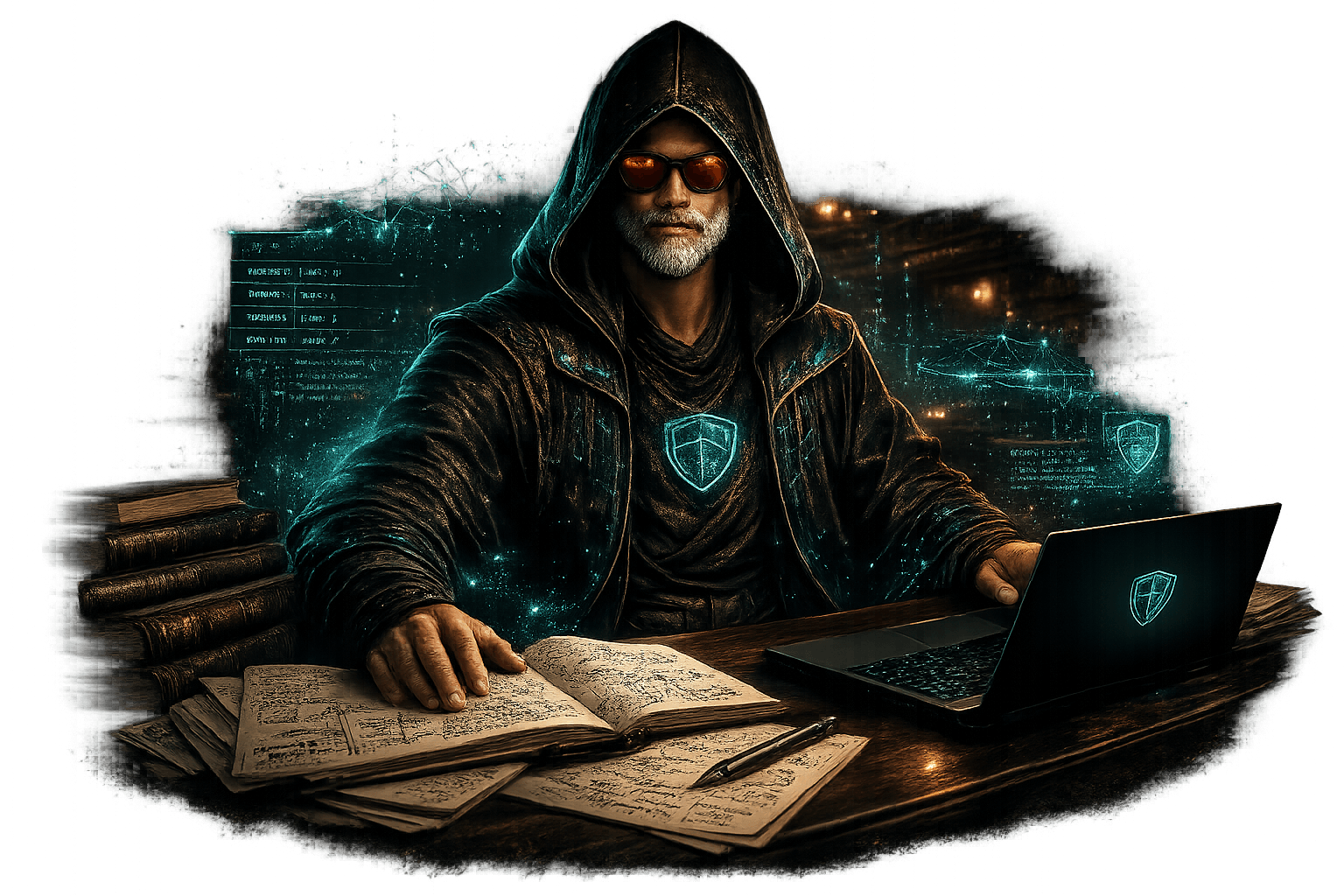
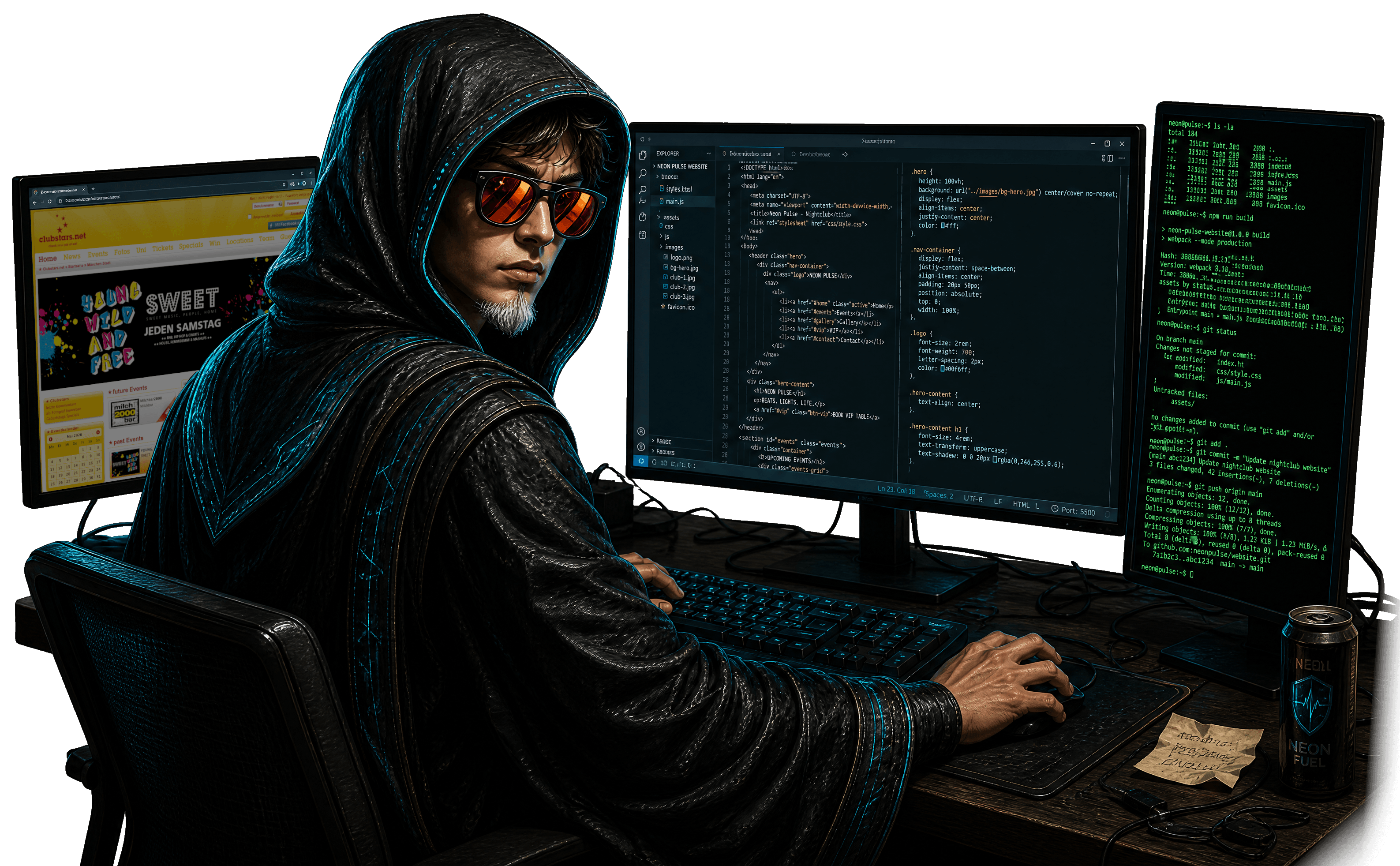
Portrait: hooded druid with mirrored aviator sunglasses

By day I move through the inner circles of a large order — where the next few seasons are decided.

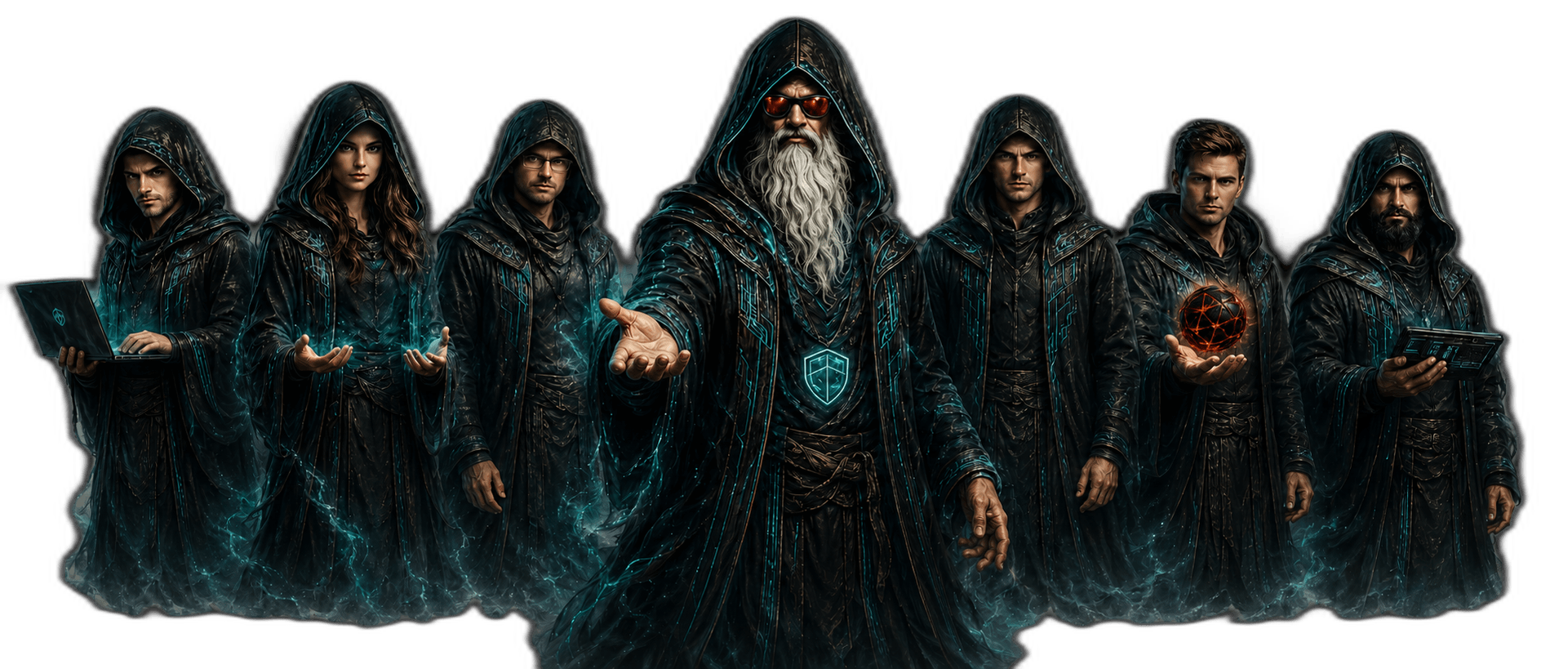
They call one role director. What it means is: a circle held in motion — those who write the incantations, those who have taught the sentinels to act without asking, those who keep the roots alive.

They call the other architect. What that means is: I read the ground before anything is planted. What gets planted: detection pipelines, automated responses, a platform the sentinels can stand on.

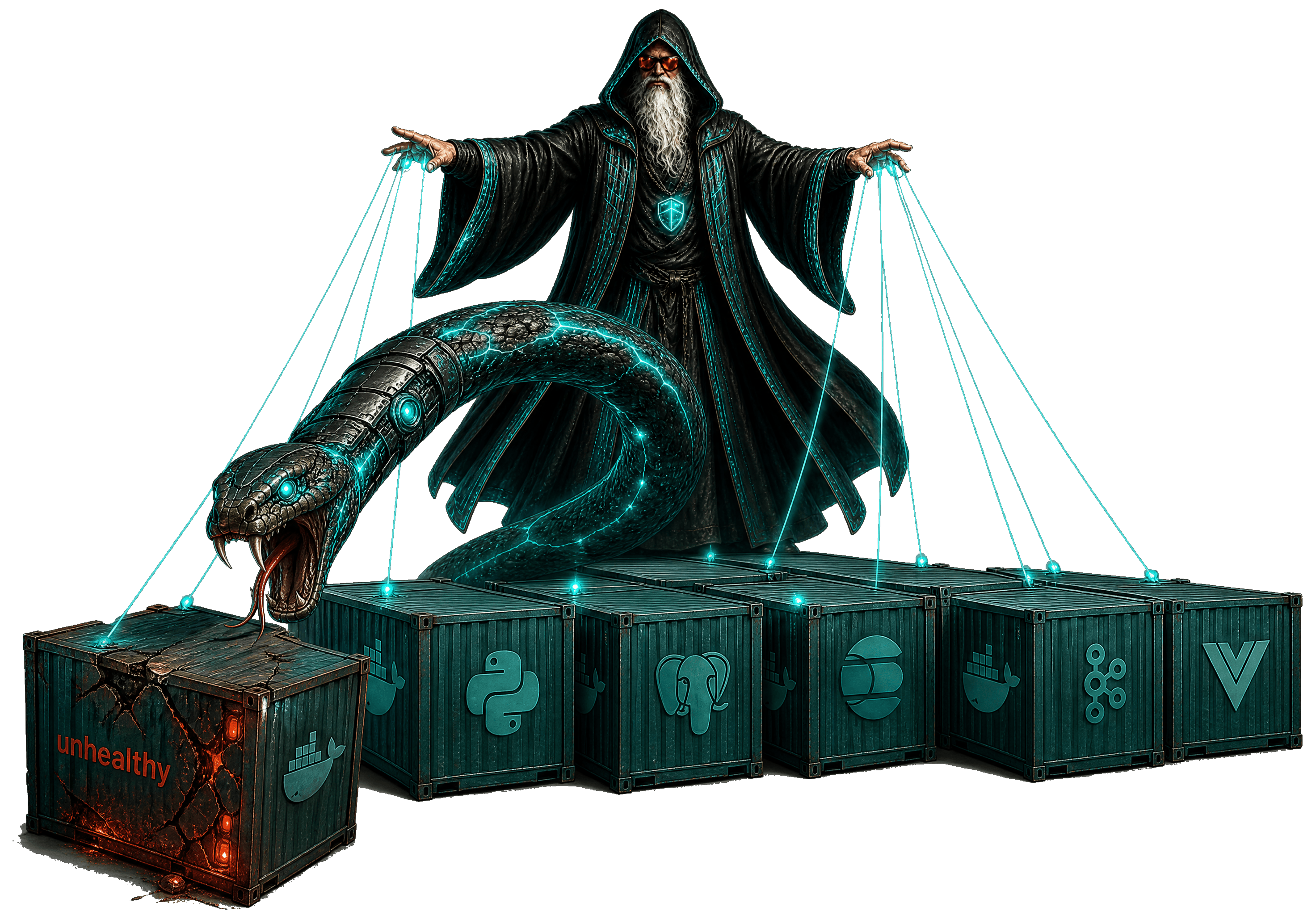
The grove sustains itself. Servers hum beneath the roots — wards against noise on the network, tunnels beneath the open forest, a forge for code, a watcher that keeps the house in balance. No dependency the grove did not choose.

The logs have grown quiet — years of uptime leave little to report. The configurations have not changed in seasons. Nothing pages the grove at 3 a.m. The lab does not demand attention. It runs. I notice when it doesn't.

When the urge to build something surfaces, I reach for the soldering iron. In the corner stands an LED matrix — cut wood, hand-wired strips, a Raspberry Pi, a runtime written in layers. You can play Snake on it with an SNES controller.

Other things wait on the bench. Colourful interlocking bricks count too — the kind that come in numbered bags, reward patience over speed, and ruin your feet in the dark.

02 / Waypoints · The Path to Root

Waypoints
along the path.

Each role a commit on a branch that spans two decades.
The merge target has always been the same.

< 2000

The First World

childhood · a Super Nintendo and a television

A grey box. A cartridge slotted in with both hands. The screen filled with Yoshi's Island — floating platforms, pastel sky, a small green creature that moved when I moved.

The machine conjured a world from a shell of plastic and silicon. I did not know how. That question would wait years to find its answer.

What I knew: pressing a button made something happen. Learning the rules let you go further. The world rewarded attention. I stayed until the television went dark.

The spell was cast then. The forest would come later — this was the first glimpse of what lay on the other side of a screen.

Origins SNES First Contact
2000

First Incantations

Self-taught · school years · foundations

It started with a game — one seen online, and the question of how became the only question. Looked at the source. Found PHP. Found MySQL. Found that the forest had an entrance.

Spent the years that followed building for communities: clan sites, match records, member pages, gatherings that existed mostly online. The browser game never shipped. The craft grew without ceremony. The internet was already a forest then — I just didn't have a name for it yet.

Self-taught PHP MySQL Foundations
2005

Developer & Sysadmin

working student · the clubs and the stars

The client: a photography company that sent crews into nightclubs and needed somewhere to hold the pictures. Built the platform from scratch — community layer, upload pipeline, the servers underneath. No team. No runbook. No one to hand it off to when something broke.

Things broke. Servers went dark, ran out of resources, came back slowly. No escalation path — just the logs and whatever could be figured out from them. Each failure answered a question the coursework had never asked. The craft grew fastest where the theory ran out.

Developer PHP MySQL Sysadmin Linux
2007

Computer Science Student

the academy

Studied networks, security, and economics. Between lectures, held the lantern for others — programming courses, databases, the first rites of writing code and shaping data.

One practicum stood apart from the coursework: cables first, protocols next, routing tables last. Every layer opened and studied from the inside — from the question a switch asks the room to the treaties that hold the internet's paths together. Built it all by hand. The kind of work that leaves a mark.

The thesis came last: what can the browser seal before the wire carries it? Written inside a sentinel institute that builds its own defences.

Networks Security Tutoring
2013

Incident Responder

a corporate CERT · sentinel ward

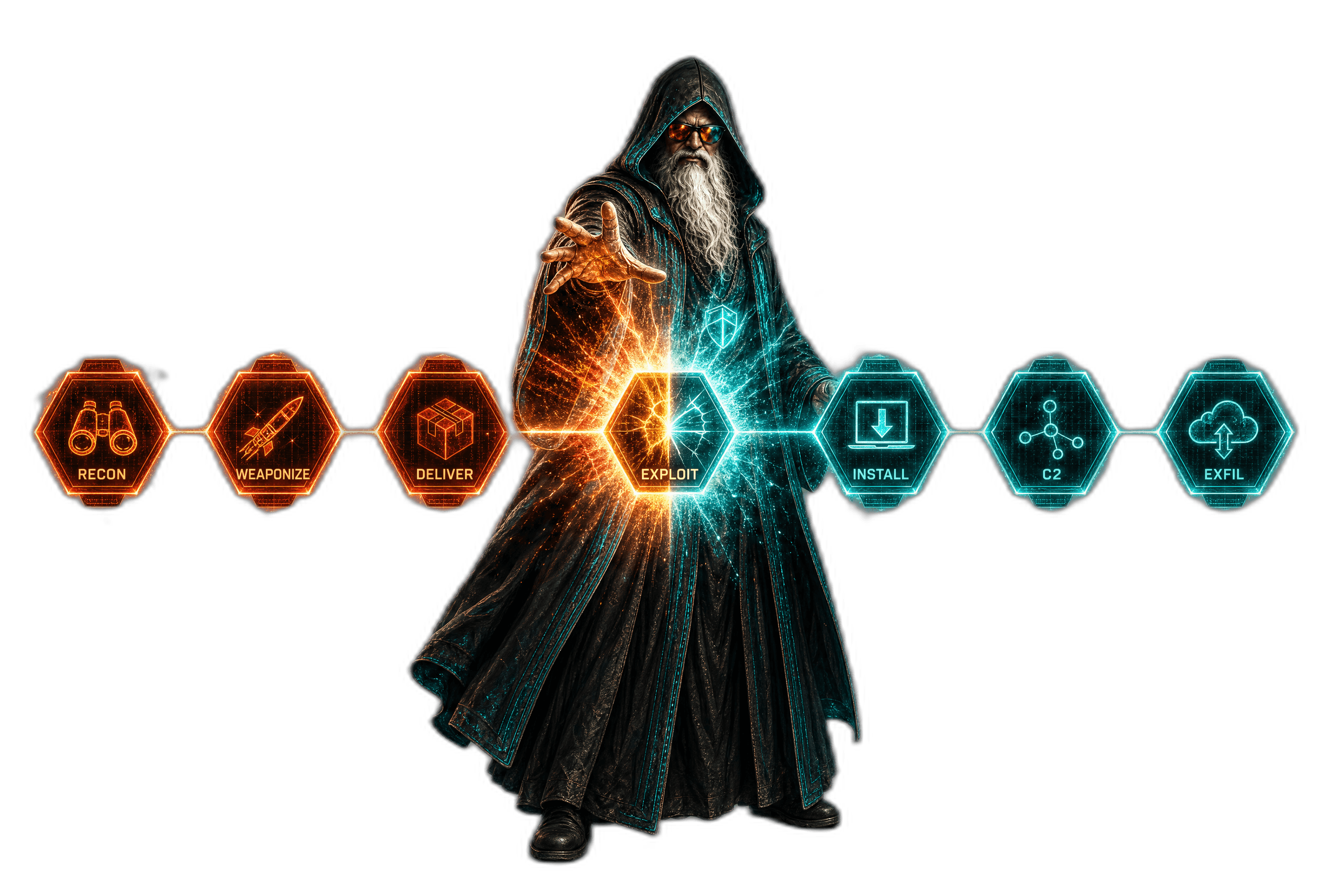
Stood watch while the forest burned. When the signal came — attacker in the network, lateral movement confirmed, kill chain mid-flight — the work began: trace the intrusion path, contain the breach, cut the next stage before it landed. The fire usually started with a letter.

The network was shared — the CISOs were not. When incidents ran, a dozen of them needed briefing: fast, clear, translated from technical to consequential. Learned to hold both conversations at once: the logs and the briefing room.

Read packet captures like scripture, correlated logs across a dozen systems, checked what the sentinels on every endpoint had witnessed. Wrote post-mortems that asked the uncomfortable questions. Learned the adversary's grammar. Moved faster for it.

Incident Response Kill Chain On-call Forensics EDR
2017

DevOps Engineer · Security Tooling

a corporate CERT · sentinel ward

It started with automation. Small incantations to speed up incident handling. Nobody assigns what comes next — it accretes. The scripts became tools, the tools became platforms, and the platforms needed someone to hold them together.

Ended up steering development across incident response, threat intelligence, and forensics teams. Three disciplines, one platform layer beneath them all. Kept the pipelines honest, the integrations wired, the automations from quietly unravelling.

A different kind of on-call — the kind where teams depend on what you built. No attacker in the network this time. Just a broken deploy and a dozen analysts waiting.

Python DevOps Automation Security Tooling Coordination
2024

Engineering Manager

the order · security ward

The ward was new — assembled from scattered parts of the order, gathered under one root for the first time.

Two missions ran in parallel: web applications that other teams depend on for internal workflows, and platforms the whole organisation uses for cybersecurity processes.

First we rebuilt the ground beneath it all — infrastructure raised from scratch, segmented, sealed with proper authentication, and kept clean by the same automation it was built to serve.

Alongside it, we tended the chronicle — a SIEM of considerable weight: a hall of iron at a single centre, listeners at every edge of the forest, a petabyte of logs that never forgets — a platform we had taken from the order's general keepers to run ourselves, for tighter control and changes that didn't wait.

Then we turned to the SOAR stack — automations written before the craft arrived — and rewrote them: freed from a single vendor's hold, better structured, closer to something that lasts.

Management Development Infrastructure SIEM
NOW

Director · Architect

the order's inner circle · full-time

The newest waypoint — and the widest.

Two roles, one station: one that asks what should be built, one that holds the team building it.

The security organisation runs on what this team builds — automated workflows across every discipline, the pipelines that shape how data moves through the order, the internal tooling others reach for without asking who maintains it.

The terrain shifts week to week. New disciplines, new problems at a scale the previous stations only gestured toward. The craft is not finished — it is widening.

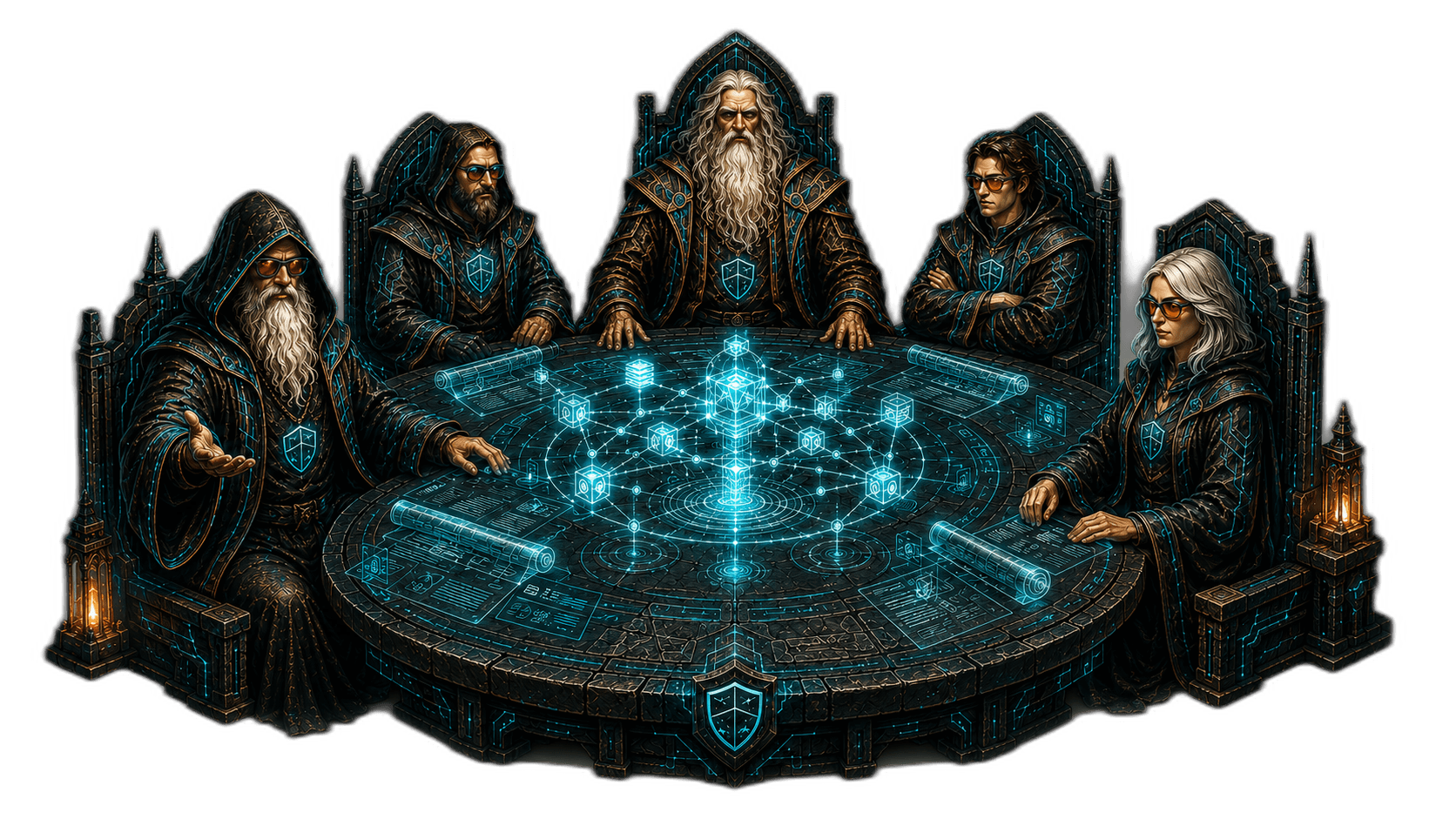
Around the table sit those who have walked further. I arrived knowing how to build. I am learning something else now — how to see.

I shape what gets built. I answer for what runs. What the path holds next, I will find out.

Leadership Architecture Development Security Automation Platform
04 / Crossroads · Where to Find Me

Where to find me.

These are not contact forms. They are coordinates.
Use them accordingly.

// SITE
cyberdrui.de
this page, updated when the wind changes
// MAIL
warden@cyberdrui.de
signal gets a reply · noise does not
// GITHUB
github.com/cyberdruide
tools, projects, occasional experiments
BEGIN TRANSMISSION
the wire carries what you put on it.
put something worth carrying.

the druid reads everything.
replies to what deserves one.

the forest is listening.
it always has been.